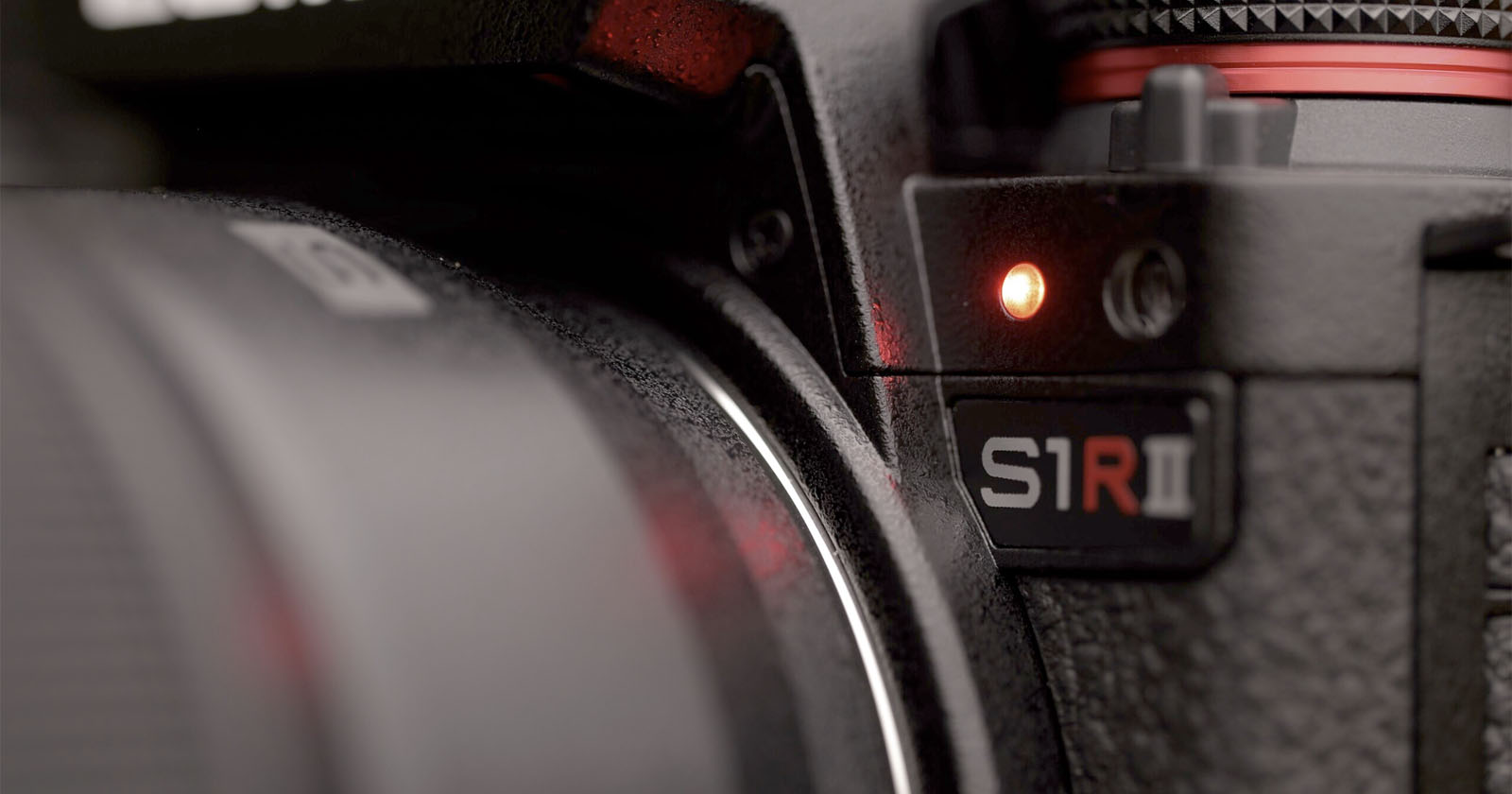
Shooting open gate video uses the entire sensor, not just a 16:9 or 17:9 window of it. Photo: Richard Butler Nowadays, the internet is often abuzz with discussions about open gate video recording, especially when a new camera adds (or fails to add) it as a feature.
But for the uninitiated, it can be hard to tell why people care enough about it to leave endless "no open gate, no buy" comments, and there's even a risk of overemphasising its usefulness in all the excitement.
What is open gate?
A still from footage shot using the Canon EOS R6 III's ~7K open gate mode.
In case you've missed it, open gate is a recording mode that captures the entire area of a sensor. In hybrid stills/video cameras, that typically means producing a 3:2 or 4:3 image, rather than a 16:9 or 17:9 one, like most people will be used to. This often, but not always, also results in a much higher-resolution file; some cameras that don't offer >4K modes for the more standard aspect ratios will give you access to the sensor's full resolution in open gate mode.
The feature has been gaining popularity in consumer-focused cameras since Panasonic added it to the GH5 via a firmware update. Its inclusion has seemingly corresponded with sensors getting faster readout speeds: since the camera has to read out more of its sensor's height than when it's recording 16:9, the sensor has to be fast enough to read out its entire area in 1/24, 1/30 or 1/60th of a second to deliver video.
Why would you use it?
The feature came to hybrid mirrorless cameras as a way to give videographers a better experience when shooting with anamorphic lenses that have a high squeeze factor. By capturing a taller image, then squishing it down, you can get a stronger "look" (ovular bokeh and interesting compression when focus racking) without having a toothpick-thin aspect ratio like you'd get if you'd originally shot it in 16:9.
If that all sounds like Greek to you, don't worry too much; it can be complicated to shoot anamorphic lenses 'properly,' which is why doing so isn't particularly common. If that was all open gate shooting let you do, it would have likely remained an extremely niche feature. However, users – and manufacturers' marketing departments – quickly discovered that there are other reasons to capture the entire sensor.
Chief among them is that it gives you room to manipulate your footage without having to crop in beyond your native resolution. If you're shooting at 3:2 or 4:3 and delivering to 16:9, you have quite a bit of freedom to choose which part of the frame you want to take your crop from. You also have more leeway to reposition your subject in the frame, rotate the footage, or stabilize it in post, without losing too much resolution or substantially changing your original horizontal framing. The additional vertical space and, often, resolution, let you crop in further to simulate an additional, tighter focal length. You can also move the crop around, simulating a pan or tilt to add a sense of dynamism without the need for an actual camera operator.
This illustration from the S5II's product page shows one of the main selling points manufacturers push when talking about open gate.
Image: Panasonic
What may be driving increased interest in open gate shooting is the ability to take that reframing to the extreme, pulling two entirely different formats from a single shot. That extra vertical headroom makes it easier to take a vertical crop out of your video, letting you shoot one clip and then cut it for horizontal platforms like YouTube and vertical ones like TikTok or Instagram. As these platforms have gained popularity, so too has the desire to take video shot for other, more landscape-focused platforms, without having to do two separate takes.
A 9:16 vertical crop taken from a 3:2 open gate image. Plenty of room for captions and overlaid UI.
A 9:16 vertical crop taken from a 16:9 image. Which could come across as a bit tight.
While this is technically possible with 16:9 footage, it can be quite difficult to find a framing that works for both horizontal and vertical with such a narrow aspect ratio.
What are the downsides?
This open gate shot, taken on a Panasonic S1II, can technically be split into vertical and landscape shots, but as often happens, one won't be as nice a composition as the other.
Of course, open gate footage isn't necessarily immune from this problem, either. When producing videos for our YouTube channel, we sometimes shoot in open gate when we plan on also uploading a cut to social, and we've found that it can be tricky to find a framing that will work for both. In the example above, the vertical crop shows off the interesting glass sculpture hung in the treetops, but any horizontal crop that includes the presenter will look either off-balance or just make it look like he's standing in a featureless forest.
Open gate footage also usually takes up more storage space, owing to its higher resolution, which is something to keep in mind. It may also be a bit harder to edit on lower-end hardware, depending on what you're trying to do with it.
Finally, there's the issue of framing. Unless you're delivering video in your sensor's aspect ratio, shooting in open gate means you'll have to crop in on your footage when editing, which is an extra step in the process, requiring you to decide what the best framing is on a shot-by-shot basis. If your camera has the ability to display framelines, you can try to make sure your framing is relatively consistent while shooting, but there may still be the temptation to endlessly fiddle in post, trying to get the perfect crop.
So should I actually care?
The Sony a7 V doesn't have open gate. Some people view this as a dealbreaker, which it may very well be for them. But that doesn't mean it will be for everyone.
Photo: Mitchell Clark
If you've reached this point in the article and have found yourself thinking something along the lines of "I can't ever imagine needing/wanting to do any of this," you're probably not alone. People have gotten along very well with cameras that only shoot 16:9 for years, and while there's definitely an element of "I can't go back now that I've tried it" to open gate, many of its benefits are decidedly niche.
Of course, if you fit into that niche, open gate can be a valuable tool. Personally, I find it most valuable as a way to give myself more leeway when I'm trying to record myself, or when I feel artistically called to deliver video in a more square aspect ratio.
The point is not to prescribe where on that spectrum you should fall, but to highlight the fact that open gate isn't a universally useful feature. There will be those for whom it's a nice-to-have, but not necessarily a reason to pick one camera over another, and others whose needs make it a must-have feature (and still others who won't ever use it, plus those who are mad their camera even shoots video at all).
. dpreview.com2026-2-4 17:00